
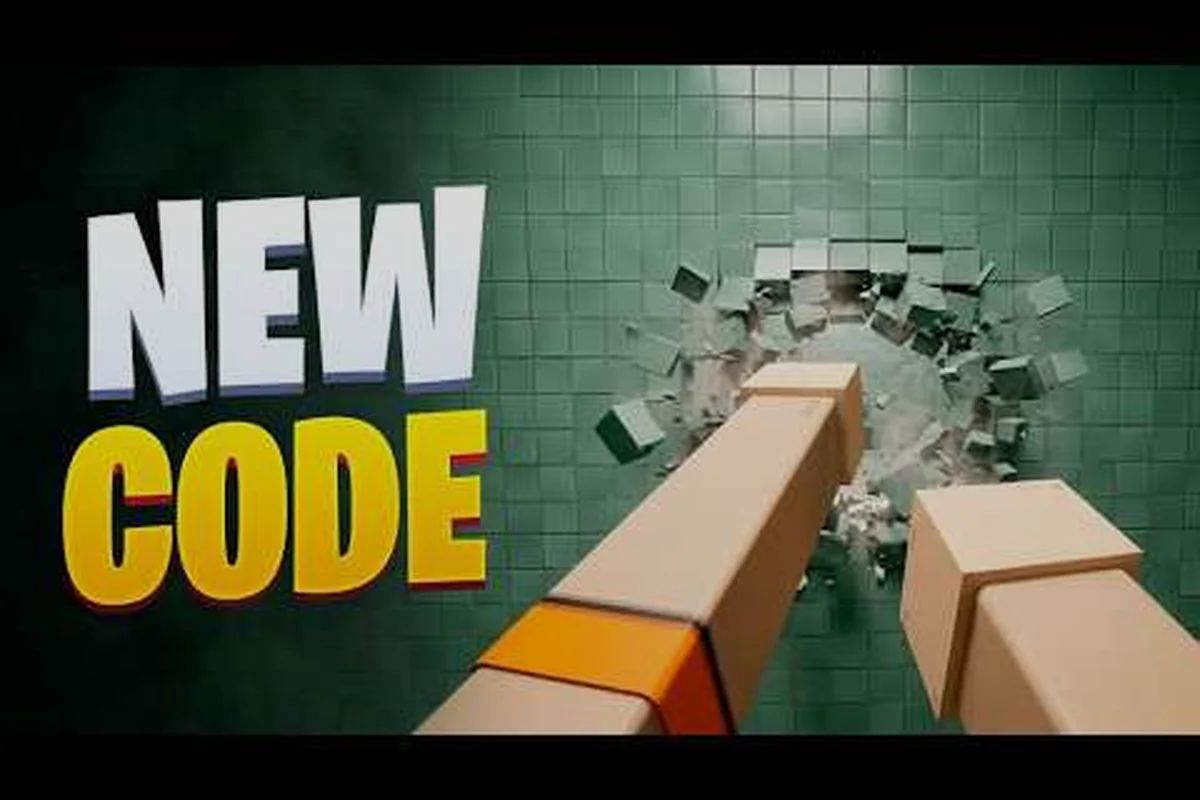
Punch Walls to Escape gameplay turns a prison break into a satisfying work-and-upgrade loop. You start with nothing but your fists, break wall blocks, vacuum the rubble, and dump it into the Bucket for cash, making each tunnel more efficient.
Punch Walls to Escape Gameplay Overview
Punch Walls to Escape is a Roblox game built around a simple but flexible idea: earn your way out of confinement by physically dismantling the wall. The official Punch Walls to Escape game page describes a guard throwing the player into solitary confinement with bare fists, followed by a progression loop of breaking blocks, collecting debris, and using the Bottomless Bucket.
That premise matters because every major system supports the same objective: creating a tunnel to freedom. Your punches generate rubble, the vacuum reduces the labor of collecting it, and the Bucket converts the rubble into immediate cash. Cash then improves either your striking power or collection speed. Although the activity can resemble a repetitive grinder, its pacing, upgrade choices, and multiplayer setup create a progression loop that rewards efficient routing and steady performance.
The Core Escape Loop
The main cycle is straightforward, but understanding each stage helps you avoid wasting time. You punch a targeted block until it breaks, vacuum the resulting debris, carry it to the Bucket, deposit the load, and receive cash. That money can fund stronger fists or a faster vacuum, which lets you remove more wall per minute.
| Gameplay stage | What the player does | Immediate result |
|---|---|---|
| Break the wall | Aim at blocks and punch repeatedly | Blocks release rubble |
| Collect the rubble | Use the vacuum on nearby debris | Debris moves toward the player |
| Dump the load | Carry rubble to the Bottomless Bucket | Cash is awarded |
| Upgrade equipment | Spend cash on fists or vacuum | Faster punching or collection |
| Extend the tunnel | Continue toward the exit | Progress toward freedom |
Solo and Prison Yard Play
Players can work alone or share a prison-yard cell with as many as four participants. Solo play gives you full control over where you dig and when you deposit, while a group can divide the work into striking, vacuuming, and carrying roles. Even when several players occupy one area, keeping the tunnel organized remains valuable because rubble scattered across the floor can slow down collection.
Punch Walls to Escape what is Punch Walls to Escape is best answered as a short progression sandbox: you begin with a physical escape objective, earn resources by processing debris, and use those resources to reduce the effort required for the next section. The beginner guide to solitary confinement basics expands on the early-game setup and first escape.
Punching, Vacuuming, and the Bucket System
The three central tools divide the job into distinct roles. Your fists begin the extraction process, the vacuum gathers the loose pieces, and the Bucket turns those pieces into usable currency. Losing sight of that division is a common early mistake because players may punch continuously without establishing an efficient route between the wall, debris field, and Bucket.
Breaking Blocks Efficiently
Aim at a consistent part of the wall rather than jumping among nearby blocks. A straight digging lane makes it easier to keep loose rubble in one area and reduces the distance your vacuum must cover. Since fist power is upgradeable, early sessions should focus on learning the correct target rhythm rather than attempting to maximize each individual swing.
| Priority | Reason | Practical result |
|---|---|---|
| Maintain a straight lane | Reduces wasted movement and scattered rubble | Faster vacuum cycles |
| Punch the nearest exposed block | Prevents debris from spreading through the tunnel | Cleaner workspace |
| Upgrade fists after several deposits | Saves money for a meaningful damage increase | Quicker block breaking |
| Pause when the screen is crowded | Prevents debris from accumulating near the Bucket | Easier dumping |
How the Vacuum Clears the Rubble Bottleneck
The vacuum is the main bottleneck remover. Once the wall produces several pieces of rubble, collect them in one movement rather than repeatedly starting and stopping. Keep the pickup area clean, and move toward the Bucket before the collected load becomes an obstacle. Because the vacuum can be upgraded, the game rewards players who make regular deposits instead of hoarding everything until the end.
A useful deposit rhythm is to break several blocks, vacuum the resulting pile, deposit it, and immediately return to the wall. This creates a repeatable routine with very little downtime. If the tunnel becomes crowded, deposit before expanding too far sideways; a clean lane is generally faster than a wide field of scattered debris.
Why the Bottomless Bucket Matters
The Bottomless Bucket is more than an end point for carrying debris. It completes the economic loop by converting physical labor into cash, which makes upgrades possible. The Bucket also creates a natural stopping point beside the wall. Players who keep a direct route between their digging face and the Bucket avoid traveling back across the full cell after every collection.
| Resource source | Main use | Best timing |
|---|---|---|
| Punched wall blocks | Initial rubble production | Whenever a clean target is exposed |
| Vacuumed rubble | Bucket deposit | In batches large enough to reduce travel |
| Bucket payouts | Cash for upgrades | After each completed work cycle |
| Shared multiplayer labor | Faster tunnel coverage | When roles remain coordinated |
For a closer explanation of progression and resource handling, the core loop overview breaks down the relationship between grinding, dumping, and upgrades.
Cash, Upgrade Tracks, and Progression
Cash gives you two main progression paths: stronger fists and a more efficient vacuum. This is the most important strategic decision in Punch Walls to Escape gameplay because the two tools solve separate problems. Punching determines how quickly blocks release rubble, while the vacuum determines how quickly that rubble reaches the Bucket. Improving only one side can still leave a bottleneck elsewhere.
Comparing the Upgrade Paths
No single upgrade path is universally best because your session speed depends on the entire chain. If one block takes noticeably longer to break than the time required to collect its debris, fists may be the limiting factor. If punching feels fast but rubble remains scattered, the vacuum is the better target.
| Upgrade path | Main benefit | Best when... | Common mistake |
|---|---|---|---|
| Fists | Breaks wall blocks faster | Punching is visibly slow | Upgrading while debris still dominates the workload |
| Vacuum | Collects rubble faster | Loose pieces take too long to gather | Ignoring a clean, efficient route to the Bucket |
| Balanced upgrades | Improves the full work cycle | Both stages feel slow | Saving too long for one expensive tier |
| Bucket timing | Maximizes paid deposits | You already move efficiently | Depositing a tiny load after a long return trip |
The best upgrade decision follows the slowest visible step in your cycle. If blocks disappear at a steady pace but you spend too long gathering pieces, improve the vacuum. If the wall barely changes after repeated punches, prioritize fists. Once one side is ahead, redirecting the next purchase prevents the gap from wasting time.
Reading the Speed of Your Session
A simple timing test can reveal which upgrade matters without requiring exact damage or price formulas. Time a small group of blocks from first punch to Bucket deposit, then repeat the measurement after collecting a fresh pile. A long punching interval signals a fist problem, whereas a long collection interval signals a vacuum problem.
Pocket stopwatch method:
-
Mark the moment you hit the first block.
-
Time until its rubble reaches the Bucket.
-
Record separate punch, vacuum, and travel intervals.
-
Compare those intervals after your next upgrade.
-
Upgrade the category with the longest repeated delay.
This approach also avoids spending cash based only on visual excitement. A new particle effect may feel powerful, but measured efficiency is what determines how quickly you complete the tunnel. The fist versus vacuum comparison offers a deeper breakdown of how to choose between the two tracks.
Efficient Tunnel Strategy and Player Coordination
Efficiency comes from reducing travel, organizing debris, and keeping upgrades relevant to your current bottleneck. This is especially noticeable in multiplayer, where a good group can cover more wall without duplicating effort. The ideal shared setup assigns each player a natural work area and keeps the Bucket accessible to whoever is carrying the largest load.
Solo Tunnel Routing
A solo player should create a simple loop rather than excavating randomly. Begin with the nearest wall section, collect rubble into a small staging area, deposit it, and then reopen the same path. Widen the tunnel only when the route becomes blocked or the available targets become inefficient.
| Stage | Solo approach | Why it works |
|---|---|---|
| Excavation | Work on one exposed face | Concentrates rubble |
| Collection | Vacuum the nearest cluster | Reduces pickup distance |
| Delivery | Use a direct path to the Bucket | Minimizes empty travel |
| Expansion | Continue along the same axis | Prevents a sprawling work area |
| Upgrading | Fix the slowest measured step | Prevents wasted spending |
Avoid punching deep into a second tunnel before dealing with the first. Two active digging fronts can double the number of loose pieces and turn the vacuum into a bottleneck. Completing one lane to the next checkpoint or opening is usually better than creating several partially finished passages.
Four-Player Coordination
Multiplayer works best when roles overlap without competing. One player can punch blocks in a dedicated area, another gathers debris, and a third carries loads to the Bucket. The fourth can clear rubble from the shared route or help punch when the first area becomes blocked.
Shared-lane system:
-
Assign one player to break the front row of blocks.
-
Keep one player vacuuming immediately behind the breaker.
-
Use another player for Bucket deposits.
-
Rotate the breaker when that area becomes crowded.
-
Open a new section only after the current lane is clear.
Community videos such as ToyTaanic’s Punch the wall to escape prison show the same basic punching-and-vacuuming pattern in practice. Treat community footage as useful for observing player routines, although exact upgrade costs and damage values may change with updates.
What Makes the Gameplay Satisfying or Repetitive
A Punch Walls to Escape review depends on whether the simple loop produces enough feedback, progression, and variety. The strongest part is immediate cause and effect: punches create rubble, vacuuming creates a visible collection, and dumping produces cash. Upgrades reinforce that feedback by making each repeated action faster.
The risk is that the central activity changes very little. If every wall segment feels identical and purchases only increase speed without altering the experience, the loop can become routine. Multiplayer coordination partly counters this because players can divide tasks, race toward an escape, or create a more organized production line.
| Gameplay quality | What creates it | How it affects the session |
|---|---|---|
| Fast feedback | Instant block damage and visible rubble | Makes short goals easy to understand |
| Readable progression | Cash purchases improve fists and vacuum | Provides a measurable reason to keep working |
| Skill expression | Efficient routing and bucket timing | Rewards active play instead of idle punching |
| Social variety | Shared cells with up to four players | Adds division of labor and company |
| Repetition risk | Similar excavation actions throughout a run | May flatten long-session momentum |
A useful Punch Walls to Escape wiki-style mechanics summary can help separate confirmed systems from community impressions. No official wiki was supplied for the current verification pass, so exact prices, payout formulas, and block durability should be checked in-game rather than presented as fixed values.
When Does the Core Loop Click?
The loop becomes satisfying once you stop treating punching as the entire job. New players often focus on damage because it is immediate, but the game’s real optimization comes from coordinating three actions. A strong punch line with poor collection still stalls, and an excellent vacuum cannot compensate for punching into poorly chosen blocks.
You have likely understood the core system when a work cycle looks like this: expose a block, break it cleanly, vacuum the cluster, deposit before the path becomes crowded, and spend cash on the stage that slowed you down. At that point, each upgrade visibly improves the next run rather than serving as a random purchase.
Frequently Asked Questions
What is the main objective in Punch Walls to Escape?
The main objective is to break through the prison wall by punching blocks, collecting the resulting rubble with a vacuum, and dumping it into the Bottomless Bucket. Each deposit earns cash, which can then improve your fists or vacuum and help you progress farther through the tunnel toward freedom.
Do you need the vacuum to escape?
No, the core escape can begin with bare fists, since breaking blocks is the starting method for producing rubble. The vacuum becomes increasingly useful as loose pieces accumulate because it reduces collection time and makes transporting debris to the Bottomless Bucket more practical.
Should players upgrade fists or the vacuum first?
Choose the upgrade that addresses the slowest part of your current work cycle. Prioritize fists when blocks take too long to break, but prioritize the vacuum when rubble takes longer to collect. If both stages feel balanced, alternate purchases so neither tool creates a major delay.
Can multiple players work in the same prison yard?
Yes, the prison yard supports shared cells with as many as four players. Coordination helps because players can divide punching, vacuuming, and Bucket deposits, although they should keep the tunnel route organized to prevent scattered rubble from slowing the group.
Is Punch Walls to Escape a complete prison break game?
It is primarily a progression-driven Roblox sandbox centered on excavating a tunnel and upgrading your tools. Its core loop is more focused than a conventional story-driven escape, with the main goal being freedom through repeated mining, collecting, depositing, and improving your equipment.